
The ultimate guide to educational toys for 10-12 year olds
The Best Educational Toys for 10-12 Year Olds in 2026
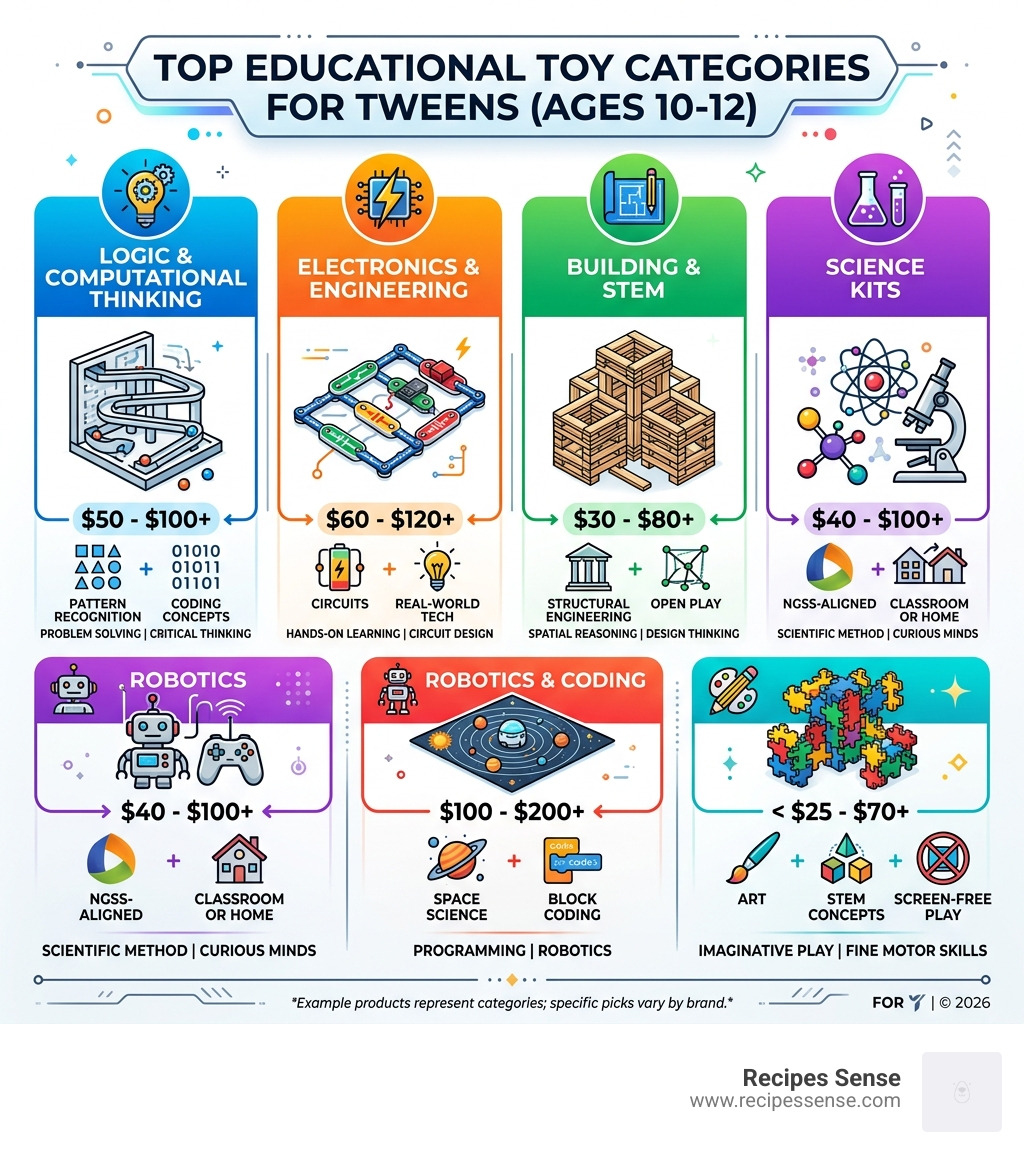
The best educational toys for 10 12 year olds right now cover a wide range of skills and budgets. Here’s a quick overview of top picks by category:
| Category | Top Pick | Best For |
|---|---|---|
| Logic & Computational Thinking | Turing Tumble | Pattern recognition, coding concepts |
| Electronics & Engineering | Snap Circuits Extreme | Circuits, real-world tech |
| Building & STEM | KEVA Structures 200 Plank Set | Structural engineering, open play |
| Science Kits | LEGO Education Science Kit | NGSS-aligned, classroom or home |
| Robotics & Coding | Ozobot STEAM Solar System Kit | Space science, block coding |
| Creative Building | Plus-Plus Building Sets | Art, STEM concepts, screen-free play |
Finding the right gift for a 10-12 year old isn’t easy. They’re past simple toys but not quite ready for adult hobbies. This in-between stage — often called the tween years — is actually one of the richest windows for learning through play.
Kids this age are developing abstract thinking, strategic reasoning, and real problem-solving skills. The right toy meets them exactly where they are.
The good news? There are hundreds of options across every budget — from sets under $25 to premium classroom-grade kits. Whether your child loves building, coding, science, or art, there’s something here that will genuinely hold their attention.
This guide breaks down the best educational toys for 10-12 year olds by category, budget, and learning outcome — so you can pick confidently without wasting time or money.
Developmental Milestones: Why Educational Toys for 10 12 Year Olds Matter
As we navigate the landscape of May 2026, the way we think about “play” for pre-teens has evolved. At ages 10, 11, and 12, children are undergoing a massive cognitive shift. They are moving away from purely concrete thinking and beginning to grasp abstract concepts. This is why educational toys for 10 12 year olds are so critical; they bridge the gap between “playing house” and “designing a smart home.”

The Shift to Abstract Thinking and Professional Tools
By age 10, many children are ready to trade in plastic “toy” versions of equipment for the real thing. Research suggests that 9-12 year olds benefit immensely from using actual scientific tools like high-powered microscopes, telescopes, and even real cooking equipment. This fosters a sense of independence and validates their growing maturity.
Social Collaboration and Strategic Competition
Socially, this age group is moving toward team-based activities and complex group dynamics. Whether it’s a collaborative engineering project or a competitive strategy board game, play now involves negotiating rules, sharing specialized roles, and solving problems as a unit. We see this reflected in the way modern STEM kits are designed—often intended for groups of four to maximize “student agency” and communication.
The 5E Instructional Model
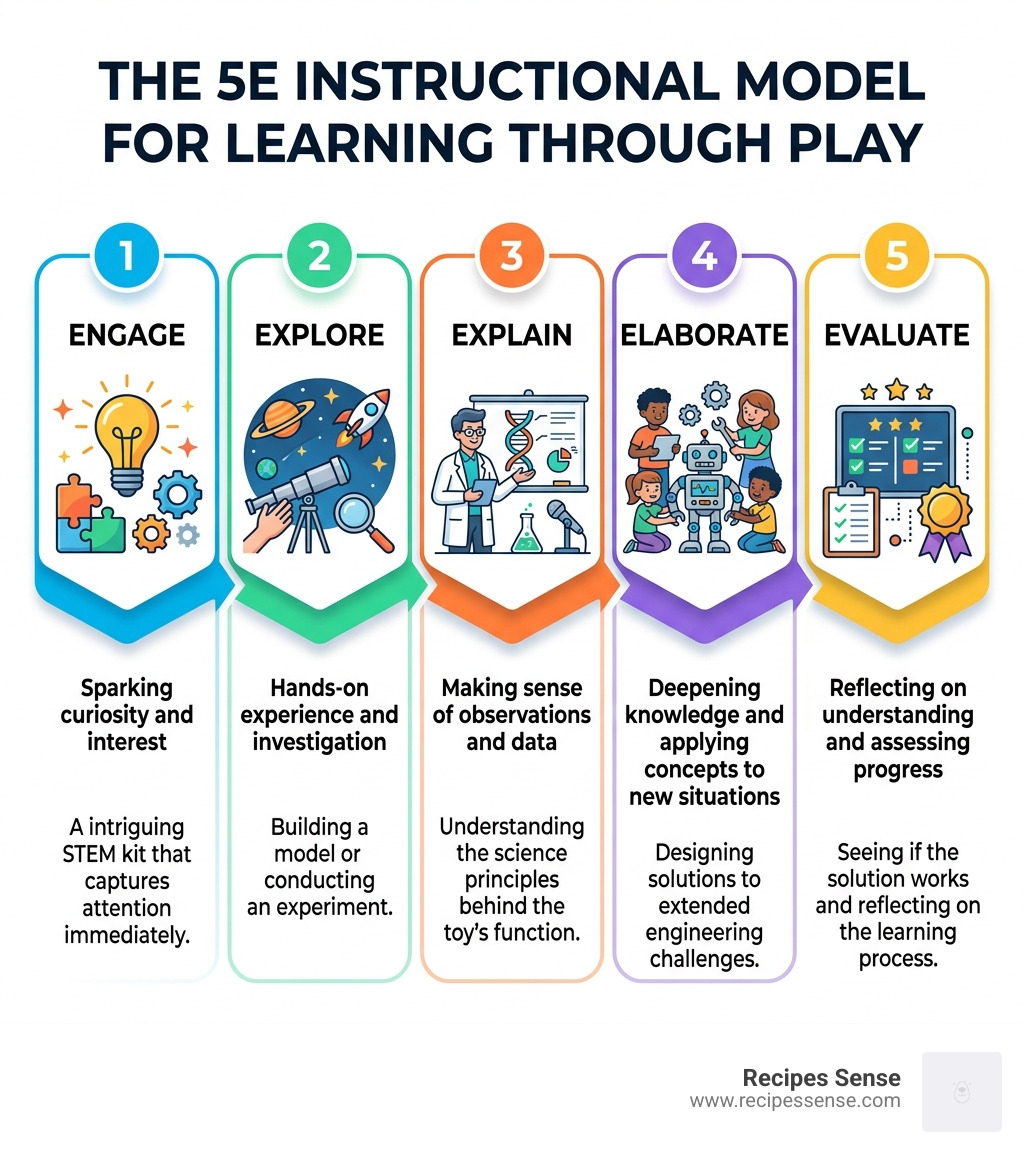
When we select toys for this age group, we often look for those that follow the 5E model:
- Engage: Does it grab their curiosity immediately?
- Explore: Can they get hands-on without a 50-page manual?
- Explain: Does the toy help them understand the “why” behind the “what”?
- Elaborate: Can they apply what they learned to a new challenge?
- Evaluate: Is there a way to see if the solution actually worked?
Building Logic with Educational Toys for 10 12 Year Olds
Logic is the backbone of the middle school curriculum. At this stage, kids are ready for puzzles that require multi-step planning. One of the most fascinating trends in 2026 is mechanical logic.
Take a look at Turing Tumble. It’s a marble-powered computer that teaches the fundamentals of coding without a single screen. By placing ramps, crossovers, and bits, children build “programs” to solve 60 different puzzles. It has garnered over 5,600 reviews because it makes the invisible logic of a computer chip tangible.
Other favorites include:
- Q-bitz: A pattern-recreation game that builds spatial reasoning and visual dexterity. With hundreds of five-star reviews, it’s a staple for quick brain workouts.
- Perplexors: These logic word puzzles help 10-12 year olds practice deductive reasoning, a skill they’ll need for everything from standardized tests to everyday decision-making.
Creative Arts and Hands-On Engineering
Engineering for tweens has moved far beyond simple blocks. Today, it’s about understanding structural integrity, physics, and even art history.
Building sets like KEVA Structures use identical wooden planks to teach balance and proportion. Because there are no connectors or glue, kids must learn the physics of gravity and friction. For those who want to blend aesthetics with engineering, Plus-Plus Building Sets offer a unique “one shape, endless possibilities” approach. These sets allow tweens to recreate 3D versions of famous artworks, like Van Gogh’s “Starry Night” or Frida Kahlo’s portraits, effectively teaching art history through structural design.
Budget vs. Premium: Finding the Balance
We know that price is a major factor when choosing educational toys for 10 12 year olds. Here is how the market currently breaks down:
| Budget Options (Under $50) | Premium Options (Over $100) |
|---|---|
| Plus-Plus Mystery Boxes: High surprise value, open-ended building. | Snap Circuits Extreme: Professional-grade electronics with 750+ projects. |
| Q-BA-MAZE 2.0 Action Sets: Physics-based marble runs (often found on clearance). | LEGO Education Science Kits: Comprehensive, standards-aligned lab systems. |
| Paint-Your-Own Kits: Fosters fine motor skills and creative patience. | Turing Tumble Educator Bundles: High-durability kits for long-term use. |
Advanced Science and Electronics for Future Innovators
For the 10-12 year old who is always asking “how does that work?”, basic science kits won’t cut it anymore. They need toys that introduce them to real-world technology.
Modular Electronics and Waveform Analysis
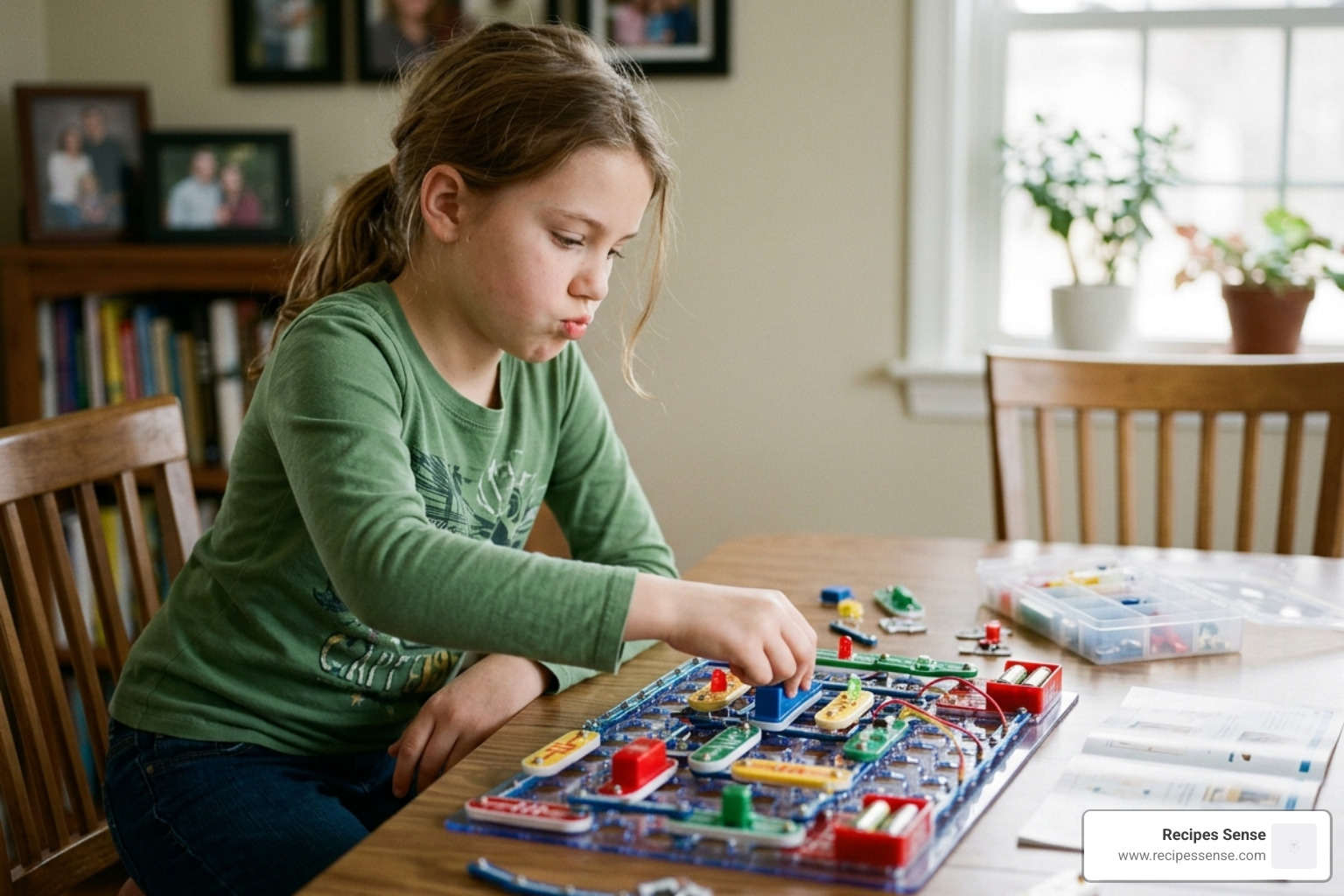
Electronics kits have come a long way. The Snap Circuits Extreme is a standout in this category. It features over 80 parts that “snap” together—no soldering or dangerous tools required. What makes it perfect for the 12-year-old mind is the inclusion of a PC interface. Kids can actually see the frequencies and waveforms they create on their computer screen, mimicking the work of a real electrical engineer.
Projects in these kits include:
- Building an AM Radio: Learning how signals are captured and amplified.
- Constructing a Lie Detector: Understanding how sensors measure skin resistance.
- Solar Power Stations: Exploring renewable energy by powering devices with a solar cell.
Curriculum-Aligned Educational Toys for 10 12 Year Olds
Parents often ask how they can support what’s happening in the classroom. The answer lies in toys aligned with the Next Generation Science Standards (NGSS).
The LEGO Education Science Kit for grades 6-8 (and the Year 7-10 version) is the gold standard here. Tested by over 3,000 students in 100+ classrooms, these kits move beyond “building for fun” into “building for inquiry.” They include 424 bricks and 40 lessons covering Physical Science, Earth and Space Science, and Engineering Design.
Space Exploration and Robotics
Space remains one of the most engaging topics for this age group. The Ozobot STEAM Solar System Kit combines astronomy with high-tech robotics. Tweens build 3D planet structures and then program a small “Evo” robot to navigate the solar system.
The beauty of the Ozobot system is its “low floor, high ceiling” approach:
- Screen-Free Coding: Beginners use color-coded markers on paper to tell the robot where to go.
- Block-Based Coding: Advanced users use Ozobot Blockly (similar to Scratch) to write complex code.
Active Play, Teamwork, and Safety Considerations
While we love a good desk-based project, 10-12 year olds still need to move. At this age, physical play often becomes more organized and strategic.
Promoting Teamwork and Outdoor Learning
Toys that encourage outdoor exploration—like high-quality walkie-talkies, GPS units for geocaching, or complex kites—are fantastic for building teamwork. These activities require communication and shared goals, which are vital social milestones for middle schoolers.
Safety First: What Parents Need to Know
As toys get more complex, safety requirements change. Here are our top tips for keeping play safe in 2026:
- Electrical Supervision: While kits like Snap Circuits are safe, any toy that plugs into a wall or involves large batteries should be used with initial adult supervision.
- Magnet Safety: Avoid toys with small, high-powered magnetic balls. These are a significant ingestion hazard for younger siblings and can be dangerous even for older children if misused.
- Protective Gear: For active play like RC vehicles or motorized projects (though motorized ride-ons are generally discouraged for the 12-year-old age bracket in some safety guides), always ensure the use of helmets and pads.
- Digital Privacy: For toys that connect to apps or the internet, check the privacy settings and age ratings to ensure your child’s data is protected.
Inclusive and Gender-Neutral Options
The best educational toys for 10 12 year olds are those that don’t box children in. Most STEM and building toys—from The Evolution of STEM LEGO set to architectural sets—are designed to be gender-neutral. They focus on the skill (coding, building, creating) rather than the “target audience,” making them perfect gifts for any curious child.
Frequently Asked Questions about Tween Educational Toys
What are the best STEM toys for middle schoolers in 2026?
In 2026, the best STEM toys are those that offer a “real-world” connection. Turing Tumble is excellent for logic, Snap Circuits Extreme for engineering, and LEGO Education kits for all-around science inquiry. The trend is moving away from “disposable” kits and toward durable systems that can be used for years.
How do I choose toys that align with school standards like NGSS?
Look for products specifically labeled as “standards-aligned” or those developed for classroom use. Brands like LEGO Education and Ozobot provide detailed lesson plans that show exactly which NGSS standards (like “MS-PS2 Motion and Stability”) the toy covers. This ensures that playtime is directly supporting their academic growth.
Are expensive premium kits worth the investment for 10-12 year olds?
Generally, yes—if the toy is “open-ended.” A kit that only builds one thing and then sits on a shelf has low value. However, a “system” like Snap Circuits or a large KEVA plank set offers hundreds of different configurations. These premium kits often replace the need for multiple smaller toys, making them a more sustainable and educational investment in the long run.
Conclusion
Selecting educational toys for 10 12 year olds is an opportunity to fuel a lifelong passion. Whether they are uncovering the mysteries of the solar system with a robotic probe, building a mechanical computer, or recreating a masterpiece in 3D, these toys provide the “aha!” moments that define a child’s middle school years.
At Recipes Sense, we believe in the power of “Sentidos despertos, paladar satisfeito”—awakening the senses and satisfying the mind’s hunger for knowledge. By choosing toys that challenge their intellect and spark their imagination, we aren’t just giving them a gift; we’re giving them the tools to build the future.
Ready to find the perfect gift that blends education with pure fun? Explore our curated collection of lifestyle products and thoughtful gifts.
